How to Teach Vocabulary to Toddlers: The Fun Daily Word Method That Actually Works

Teaching vocabulary to toddlers can feel overwhelming—where do you even start? Trust me, I’ve been there! As a mom experimenting with simple ways to boost my almost 3-year-old’s language skills, I discovered a method that actually works and keeps him excited to learn new words every single day.
If you’re wondering how to teach vocabulary to toddlers in a way that’s both effective and enjoyable, this daily word method might be exactly what your family needs. It’s easy to set up, uses things you already have at home, and transforms vocabulary building into an adventure your little one will love.
Why This Vocabulary Method Works for Toddlers
Toddlers are natural explorers who learn best through play and hands-on experiences. Sitting still to memorize vocabulary words? Not happening! But create an engaging environment with toys, books, puzzles, and sensory activities centered around one word—and suddenly they’re absorbing new vocabulary like little sponges.
Research shows that toddlers need multiple exposures to a word in different contexts before it sticks. This method gives them exactly that while keeping the learning process fun and pressure-free.
Recommended products


The Daily Word Method: Your Step-by-Step Guide
The concept is beautifully simple: Pick one word or topic each day, then create a mini learning environment around it using items you already own.
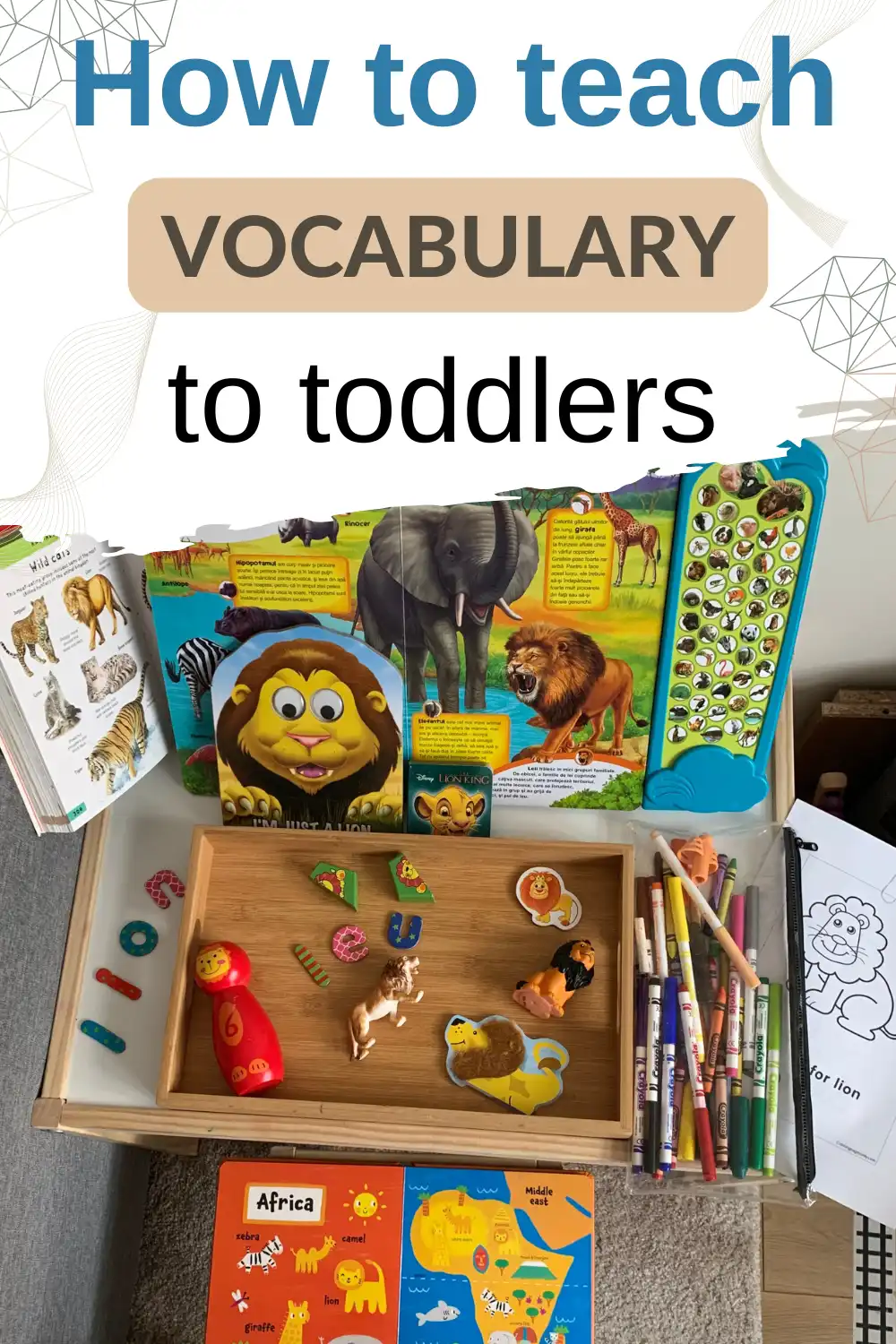
For example, when our word was “lion,” I spent just 30 minutes gathering everything lion-related in our house—books, puzzles, toys, even lion sounds on my phone—and set up a little discovery station on our coffee table.
Your daily vocabulary word can be anything that sparks curiosity:
- Animals (lion, elephant, butterfly)
- Colors (red, purple, orange)
- Shapes (circle, triangle, square)
- Emotions (happy, excited, calm)
- Household items (spoon, pillow, lamp)
📌 Related article: Best Resources for learning the Alphabet for Toddlers
How to Set Up Your Toddler Vocabulary Station

Once you’ve chosen your word, gather a variety of materials that represent it:
📚 Books & Reading Materials
- Picture books featuring your word
- Board books with simple vocabulary
- Magazines with relevant photos
🧸 Toys & Hands-On Items
- Toys or figurines related to your word
- Puzzles that include the concept
- Building blocks or manipulatives
🎨 Creative Supplies
- Printables for coloring or tracing
- Stickers related to your theme
- Art supplies for vocabulary crafts
🎵 Audio & Visual Elements
- Songs that mention your word
- YouTube videos (short ones!)
- Sound effects or noises
The magic happens when you combine visual, tactile, and auditory elements. Even if your setup looks a little chaotic at first, trust the process—kids thrive on this multi-sensory approach to learning vocabulary.
Real Example: Our “Lion” Vocabulary Day
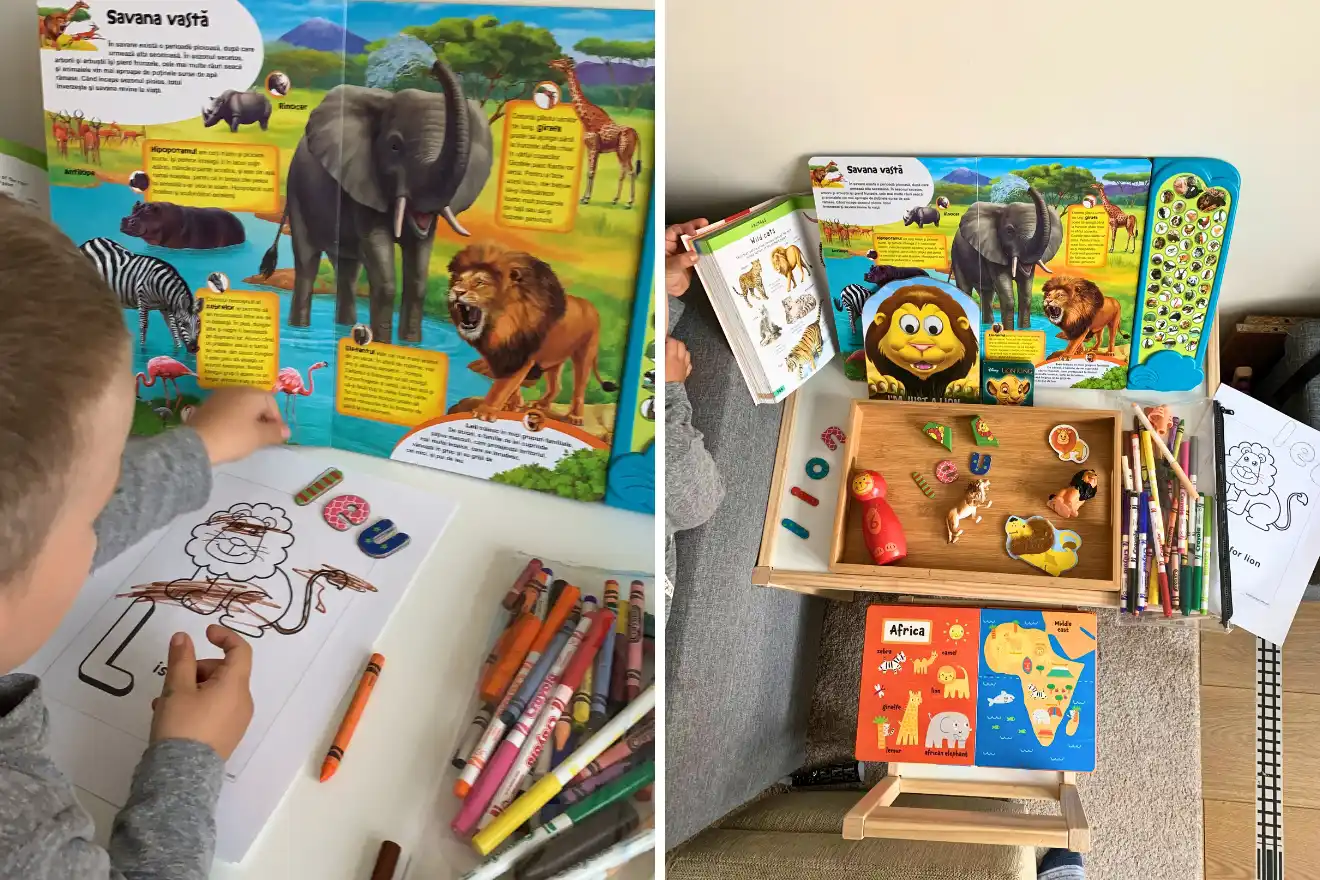
Here’s exactly what I used for our lion-themed vocabulary day (all items we already had):
Books That Reinforced “Lion”:
- Junior Picture Dictionary by Miles Kelly
- Animal Sounds board book
- The Lion King mini book
- My First Atlas Illustrated by Stephen Barker
Hands-On Learning Tools:
- Melissa & Doug Zoo Animals Touch & Feel Puzzle
- Wooden bowling set (with a lion pin!)
- Zoo animal figurines for pretend play
- 2-piece animal puzzle board
Creative Activities:
- Letter magnets to spell “L-I-O-N”
- Crayola markers for lion coloring pages
- Lion-themed printable worksheets
The result? My toddler spent almost an hour exploring, playing, and naturally using the word “lion” in different contexts. By the end of the day, he was roaring like a lion and pointing out lions in every book we read!
Want to make your daily vocabulary sessions even more effective?
Grab my free printable ABC flashcards to help your toddler connect letters with words! These colorful, engaging flashcards are perfect for adding a literacy component to your vocabulary station. Use them alongside your daily word to reinforce letter recognition and early reading skills.
Download them free using the form below!
Why I Love This Vocabulary Teaching Method

After trying countless approaches to boost my toddler’s language skills, this daily word method has become our favorite because:
- It’s quick to prepare (30 minutes or less)
- Uses items you already own (budget-friendly!)
- Keeps toddlers engaged through hands-on play
- Perfect for visual and tactile learners
- Builds anticipation (“What’s our word today?”)
- Flexible timing (works with any schedule)
- Grows with your child (add complexity as they develop)
📌 Related article: Best educational toys for 2 year olds {affordable}
FAQs about How to Teach Vocabulary to Toddlers

-
How long should each vocabulary session last?
Follow your toddler’s lead! Some days we spend 20 minutes, other days we revisit the word throughout the day. Keep it pressure-free and fun.
-
What if my toddler isn’t interested in the word I chose?
Switch it up! If they’re not engaging with “butterfly,” maybe try “truck” or “cookie.” Choose words that match their current interests.
-
How do I know if my toddler is actually learning the vocabulary?
Listen for the word in their natural speech over the next few days. Don’t worry if they don’t use it immediately—exposure is building their understanding.
-
Can I repeat words or should I always choose new ones?
Absolutely repeat words! Toddlers need multiple exposures to truly learn vocabulary. Revisiting words after a week or two is actually beneficial.
-
What if I don’t have many materials for certain words?
Get creative! Use drawings, act out the word, or find images online. The key is making it interactive, not having perfect materials.
Conclusion

Teaching vocabulary to toddlers doesn’t have to be complicated or stressful. This simple daily word method transforms ordinary household items into powerful learning tools while keeping your little one engaged and excited about language.
Remember, every child learns at their own pace. Some days your toddler will be completely absorbed in the vocabulary station, other days they might just glance at it and move on—and that’s perfectly okay! The key is consistency and keeping the experience joyful.
Start small, be patient with yourself and your toddler, and celebrate those magical moments when you hear them confidently using a new word. You’re not just teaching vocabulary; you’re building a foundation for lifelong learning and communication.
Want more ideas delivered straight to your inbox? Join my community today and never miss out on fresh, fun content that will make parenting even more rewarding.
Happy teaching words,
Xx Kinga
Related posts
Pin it for later!